Cotard/ 2019
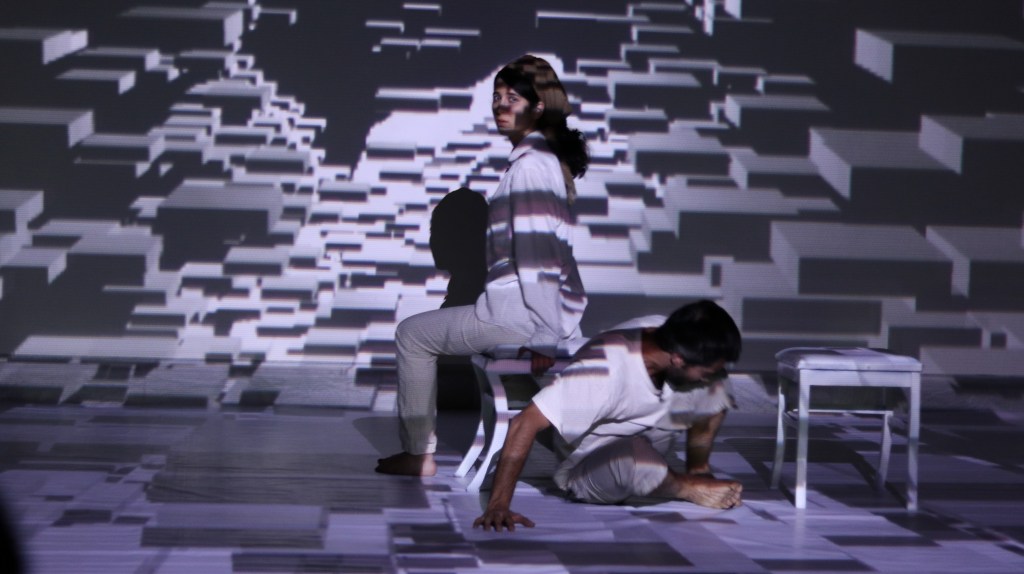

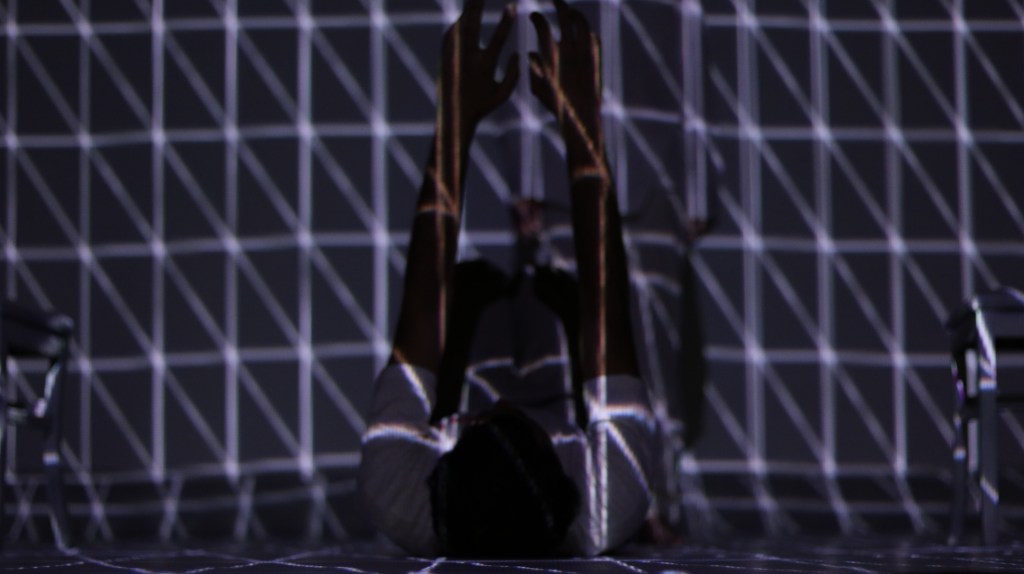
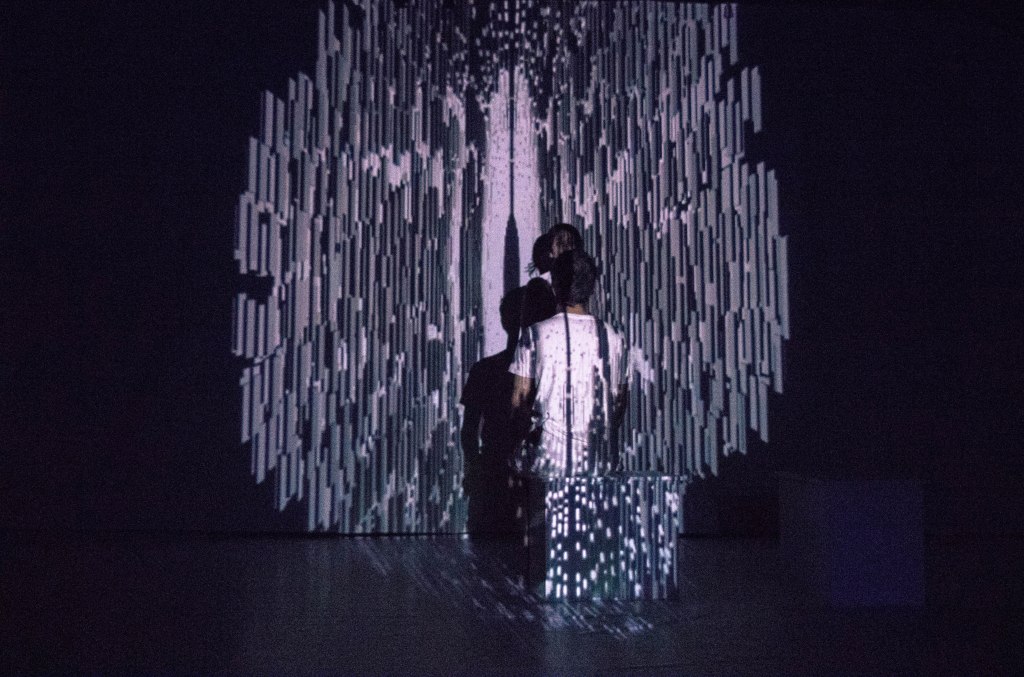


Cotard is based on a melancholy character full of inexpressive moments and memories that he remembers.
In a more detailed text, a phenomenological approach to words and text is sought for It is a reconstruction of his various personal images of his life (such as the incident in childhood for the main character , the murder his father by his mother, Dumb emotional communication, Escape from urbanization and shelter to the forest. In many parts of the text, a kind of analogy between the decay of human relations and the disintegrating psychosocial relationship with the degeneration occurring in nature exists.
The play takes place in three spaces: the first space within the mind of the main character, the second space within the hospital, and
The third space is in a theater hall.
In the face of these interconnected spaces, the audience faces a degree of distrust of the relationship between characters and the reality of each scene, and in this path of existential discovery and intuition occurs.
Zakhr Mazkh believed that if there are five signs in a play it can be called masochism:1) All occurrences take place with a slow and long rhythm, and everything is in the effort to overcome the inability of the lipidian force inside the scene.
Cotard also has a slow rhythm. (2) The masochistic atmosphere is in the attempt to deny the sensuality and create a fancy in relation to the sexual complexes of the child. Mazkh believed that fantasies occur in the space of the “mother of death” or nature.
In cotard’s text, most scenes occur in the forest and in the cold and winter nature of this. This cold and natural decline and collapse is an attempt to create a kind of metaphor and simulate the mother of the main character. For example, several places in the text are the main characters in the attempt to describe the burning and destruction of wood that is abandoned in the forest
And tries to relate the natural deterioration to his mother’s personal affairs, or how much of her maternal life is similar to a rock in the woods carrying the broken trees.(3) In every preemptive work, the presence of a Greek man is necessary for his role as torture of a paranormal object. The Greek man has a logical discipline and many pride and masculinity, and is the symbol of reason and logic in the work of mausoleum. The third character is a doctor, and attempts to create a rational space, unlike the remaining scenes that occur in the main character’s madness.4) The need for a fancy to deny sensuality. The main character tries to deny all his sexual events and compare them to similes and behind the natural fantasies, rocks, forests, ants, fur, … .
5) The element of the father must be destroyed by the mother and the collapse of the family must be made by the mother of the womb.
In cotard, the mother kills her husband and tries to abort the main character and prostitute her family. In general, attempts have been made to obscure the elements in the text by expressing fantasies, creating atmospheres, and actors slowing down events, and in music and visually suspended In this play, efforts has been made for a kind of post-drama theater based on New media elements, analyzes the movements of the actor and the effect of the form of movement in presence. The overall work of the group is to move the dramatic question from within the text to the image and generally serve The atmosphere in common is space, for example, in cotard’s every scene in an attempt to represent a particular part of the history of the psychological collapse of a person by relying on keywords related to the same scene.The key words are usually a painting, or music that accompanies us during the run to the final atmosphere (which is the same dramatic picture of the image). These atmospheres are more general in nature than the general idea embodied in it ( For example, in cotard, the general idea of creating a masochistic space and representing different elements of the paradox of the Mausoccasia is from the Deleuze’s view and zakhr Mazkh.
The group’s overall effort in all implementations emphasizes the unconscious elements involved in the implementation, the group believes that, given the issues surrounding the formation of modern thought within the capitalist system, it is necessary to change the direction of the theatricality towards the Zen axis implementation.
Part One: Text
The key word analysis in the text is that the text of the case is Benjamin, in other words, the narrative does not serve the story, trying to deny the story and distance from it by emphasizing the words themselves, their way of expressing and Their semantic collages are next to each other, for example, in a scene from Kotard Dialogue (something like smashing … something like a carrion … one hundred-day-old caraway … something that’s all going to fall …) It’s a scratch that pulls out of the chest wall of an ant … ants in his entire body … there is a damnation) that elements are: the dismemberment of the syntax and the axial approach.
So, in general, the texts written in the type of revolt against the story are based on the narrative style.Part Two: Actor
The actor first acquaints himself with the concepts of body, presence, and physical form by various exercises (mostly from Barba, Grotesque, and Kabuki exercises). In the next stage, the actor tries to rely on his lessons Around various forms of the body to observe his different forms (in the mirror) and the emotional effects of his lines (in fact, with regard to the experience of the group in dealing with the actor in this stage, the actor tries the semantic world of his lines of body Define as different feelings) In the next stage, the actor becomes acquainted with the effect of the physical form in the method of expression. The next stage, which is the main stage, is the actor trying to create different images in the atmosphere in terms of different keywords. At this point we try to understand the happening (Joehquio) and how it is formed by the body.Part III: Music
Music is usually Embindt and never gets a melodic mode but at the same time it is always present. As the actor in the final stage is familiar with the event and Joachukio, music is also trying to reconstruct the various spaces (by means of Different synthesizers), and has three stages in which these three steps are seen in both individual actions and in the overall process.
Part Four: Image and Light
Image or the Visual tries to serve the event, but more visual approach to rhythm until the picture means that the more open the visual elements of lines and Composition from trying to interpret the terms but not in fact, but abstract. The Visual Sometimes has the task of interpreting the physical form to the actor’s image in the visual mode using the Kinect and design their own marks this important issue.
Sheykh Shangar/2019

” Zār” is a burden that takes a person from the present world to the other world, which is the “conquest.” In the south of Iran,’ Zār’ belongs to the generally known category of “wind”. ‘Sheykh Shangar’ [šeyḥ šangar] is one of the most harmful sorts of wind, and it is thought to be an unbeliever. The visual of ‘Sheykh Shangar’ [šeyḥ šangar] presents a process of theatrical performance. It shows the interaction between a performer as a shadow and the audiovisual in a shared physical space on three screens. Zār’s lack of individuality is one of their most defining characteristics. However, they may achieve individuality by taking on human forms; therefore, this Spirit, which is said to possess individuals, is in the form of a shadow. The performer’s choreography as a shadow stresses the direction, speed, and rhythm of the motions in the background.


 Erfan Ashourioun